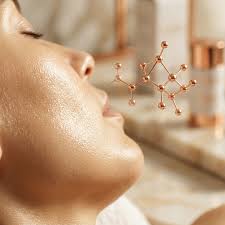
Peptides are short chains of amino acids that act as biological messengers—signaling your skin cells to produce more collagen, repair damaged tissue, and behave more like younger cells. Unlike Botox (which temporarily paralyzes muscles) or fillers (which add volume), peptides work at the cellular level to rebuild skin from the inside out, with results that develop gradually over 8–12 weeks and compound with continued use.
What Are Peptides and Why Do They Work for Skin?
Your skin constantly communicates through peptides—small protein fragments that trigger specific cellular responses. When collagen breaks down (from UV exposure, aging, or inflammation), the resulting fragments act as alarm signals, telling fibroblasts to produce new collagen. Topical and injectable peptides mimic or amplify these signals.
The three peptides with the strongest clinical evidence for aesthetic use:
- GHK-Cu (Copper Peptide): A naturally occurring tripeptide that modulates over 4,000 human genes. A landmark 2010 study found GHK-Cu promotes collagen and elastin synthesis, reduces inflammation, and has antioxidant effects. Plasma levels decline significantly after age 60.
- BPC-157 (Body Protection Compound-157): A synthetic peptide derived from gastric juice proteins. Research shows it accelerates angiogenesis (new blood vessel formation) and tissue repair—properties increasingly applied to skin healing post-procedure.
- TB-500 (Thymosin Beta-4): A cell-building peptide that promotes actin polymerization, tissue remodeling, and reduces scar formation. Used clinically in wound healing research.
The "Glow Stack": How Peptides Are Combined at Med Spas
Leading med spas increasingly offer what practitioners call the “Glow Stack”—a combination protocol using peptides alongside microneedling, exosomes, or laser resurfacing. The logic: microneedling or laser creates microchannels that dramatically increase peptide absorption depth. Applying GHK-Cu serum immediately post-microneedling can increase penetration by up to 300% compared to topical alone.
A typical Glow Stack protocol:
- Microneedling or fractional laser (creates microchannels)
- Exosome or PRP application (growth factors for healing)
- Topical GHK-Cu serum (collagen stimulation)
- At-home peptide cream morning and evening
Peptides vs Other Skin Treatments: Side-by-Side Comparison
| Treatment | Mechanism | Result Timeline | Duration | Avg Cost/Session | Downtime |
|---|---|---|---|---|---|
| Peptide Therapy | Cellular signaling, collagen gene activation | 8–12 weeks | Ongoing with use | $150–$400 | None |
| Botox | Muscle relaxation | 5–14 days | 3–4 months | $300–$600 | None |
| Dermal Fillers | Volume replacement | Immediate | 9–18 months | $600–$1,200 | Minimal |
| Microneedling | Controlled wound healing | 3–6 weeks | 6–12 months | $200–$700 | 1–3 days |
| Exosome Therapy | Cell-to-cell signaling, growth factors | 2–4 weeks | 6–12+ months | $500–$1,500 | None–1 day |
What the Research Actually Shows
GHK-Cu has the most robust evidence base. A 2015 review in Biomolecules documented GHK-Cu’s ability to tighten loose skin, reduce fine lines, and improve skin density—with effects observed at concentrations as low as 1–10 nanomolar. A 2010 microarray study found GHK-Cu modulates 4,072 human genes, resetting gene expression patterns toward a younger profile.
BPC-157 evidence is primarily from animal models and early human trials. A 2018 study in Journal of Physiology and Pharmacology found BPC-157 accelerated healing of skin and muscle wounds with no adverse effects. Human clinical data remains limited—an honest gap practitioners should acknowledge.
TB-500 human data is sparse. Most evidence comes from equine and rodent studies. A small number of aesthetic practitioners use it off-label for scar reduction post-procedure.
FDA Status: What Patients Need to Know
This is where transparency matters. As of 2026, GHK-Cu in topical formulations is generally regarded as safe and widely available. BPC-157 and TB-500, however, occupy a regulatory gray zone: they were classified as research chemicals by the FDA and are not approved as drugs. Compounding pharmacies have historically supplied injectable peptides to clinicians, but the FDA has moved to restrict compounded peptide access—a process that accelerated in 2025–26.
What this means for patients: If a med spa offers injectable BPC-157 or TB-500, ask about the source and the provider’s protocol. Reputable clinics use pharmacy-compounded preparations under physician oversight, not unregulated gray-market sources.
Who Is a Good Candidate for Peptide Therapy?
Peptide therapy works best for patients who:
- Are in their 30s–50s and noticing early collagen loss (fine lines, dullness, loss of firmness)
- Want results that compound over time, not instant fixes
- Are combining peptides with another treatment (microneedling, laser) for enhanced absorption
- Have sensitive skin that doesn’t tolerate aggressive peels or resurfacing
Peptides are not the best option for patients wanting immediate, dramatic correction. Fillers or Botox will produce faster, more visible results for volume loss or muscle-driven wrinkles.
Frequently Asked Questions
How long does it take to see results from peptide therapy?
Most patients notice improved skin texture and hydration within 4–6 weeks. Collagen remodeling results—reduced fine lines, improved firmness—typically require 8–12 weeks of consistent use. Unlike Botox (visible in 5–14 days), peptides work gradually by restoring biological processes rather than providing an immediate cosmetic fix.
Can peptide therapy replace Botox or fillers?
No—but they address different things. Botox relaxes muscles to smooth dynamic wrinkles (crow’s feet, forehead lines). Fillers add volume. Peptides rebuild the skin’s own collagen and elastin infrastructure. Many patients use peptides alongside Botox or fillers to enhance and prolong results. They’re complementary, not competitive.
Is GHK-Cu safe for all skin types?
GHK-Cu has an excellent safety record in topical formulations. It is non-irritating at standard cosmetic concentrations (0.5–2%) and suitable for sensitive skin. It does not cause the irritation or purging associated with retinoids. Injectable GHK-Cu carries a slightly higher profile risk and should only be administered under medical supervision.
What is the "Glow Stack" and does it work?
The Glow Stack is a practitioner-coined term for combining peptides (typically GHK-Cu) with microneedling or laser resurfacing to maximize absorption depth. The logic is sound: microneedling creates transient microchannels that dramatically increase penetration of topical actives. Clinical protocols at accredited med spas apply peptide serums immediately post-procedure, while channels remain open. Evidence for enhanced outcomes versus peptides alone is growing but not yet from large randomized trials.
How much does peptide therapy cost at a med spa?
Topical peptide facials and booster treatments typically run $150–$400 per session. Injectable peptide protocols under physician supervision range from $300–$800 per session depending on the specific peptides used and the provider’s credentials. At-home medical-grade peptide creams (prescribed through a med spa) typically cost $80–$200 for a 2–3 month supply.
Finding a Qualified Peptide Provider
Because peptides—especially injectables—require medical expertise to administer safely, always look for a provider with an on-site medical director (MD, DO, or NP). The best med spas will discuss your treatment goals, explain exactly which peptides they use and why, and source from licensed compounding pharmacies rather than unregulated suppliers.
Browse verified med spas offering peptide therapy, exosomes, and advanced skin treatments at MedicalSpaLocator.com — a free directory of licensed providers across the U.S. You can also explore exosome therapy as a complementary option for cellular-level skin rejuvenation.
Related: the anti-filler shift toward regenerative treatments.