By Natasha Pomelova, Founder of MedicalSpaLocator.com and melov.ai — 15 years in pharmaceutical commercialization at Takeda, Amgen, Astellas, and Horizon Therapeutics.
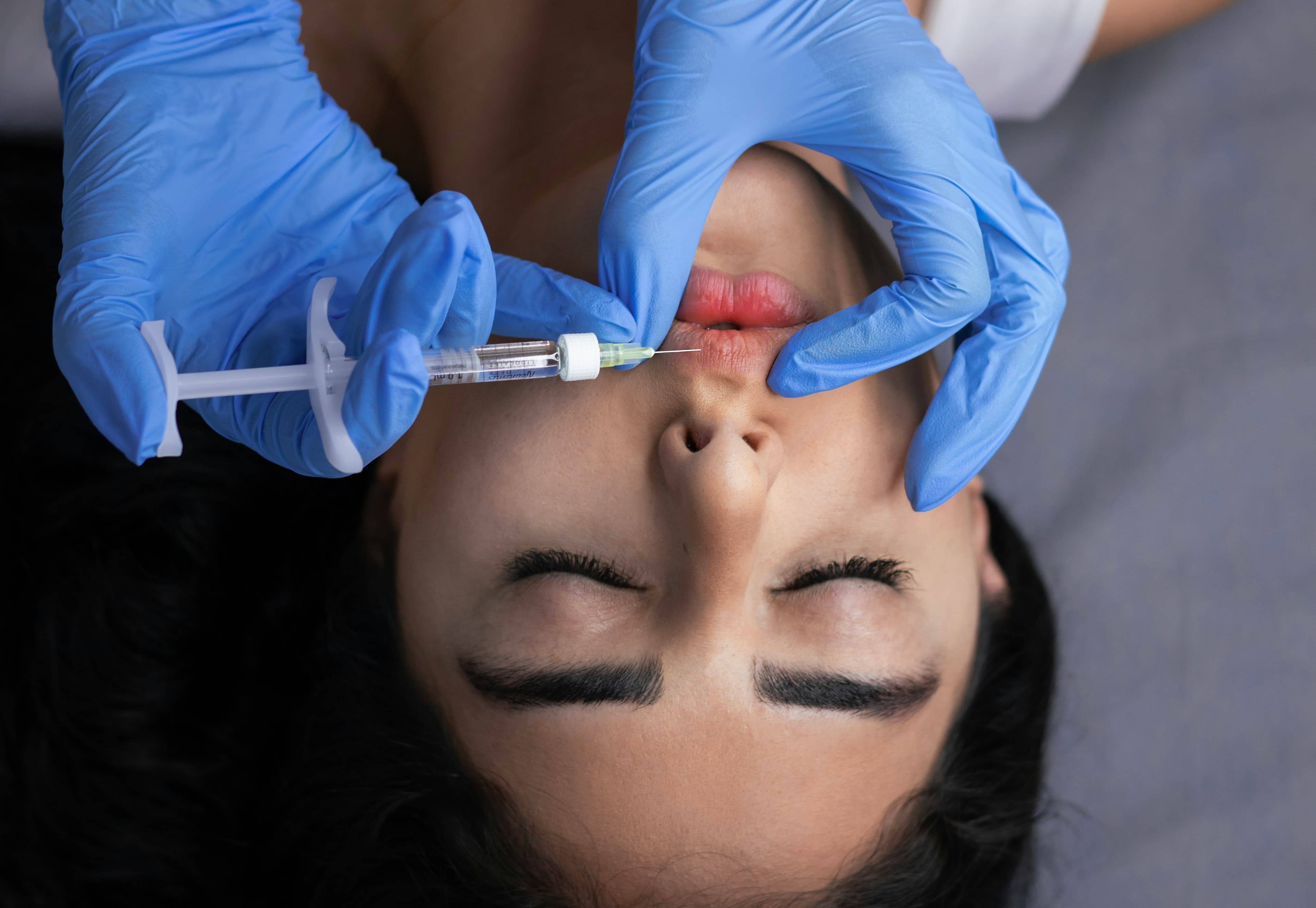
Scroll any aesthetics forum long enough and you'll find the same post: someone got lip filler, loved it for six months, went back for more, and now has a shelf above their upper lip that won't go away. The regret stories aren't rare. And the clinical data backs them up more than most med spa marketing acknowledges.
What is lip filler migration?
Migration means HA filler drifts from where it was injected. In lips, that usually looks like puffiness above the lip border (people call it a "filler mustache"), a flattened Cupid's bow, or a bloated look around the mouth that doesn't match the rest of the face. A 2020 MRI study in Aesthetic Surgery Journal found HA filler well beyond the original injection site in patients who'd had repeated lip treatments over several years. Many of those patients thought their filler had fully dissolved. It hadn't.
HA fillers are sold as temporary. They do break down. But they don't always disappear on their own. A 2021 review in the Journal of Cosmetic Dermatology found MRI-detectable HA deposits five or more years after injection in perioral tissue. Five years. That's worth sitting with before your next top-up.
How common are lip filler complications?
Most side effects are mild and short-lived. A 2019 retrospective in Dermatologic Surgery (n=397) reported 90 percent of patients had only expected bruising, swelling and tenderness, all resolved within two weeks. But migration, asymmetry, and nodule formation do happen, especially with repeat treatments or high-volume sessions.
| Risk category | Side effects | Estimated incidence |
|---|---|---|
| Common | Swelling, bruising, tenderness, redness | 60 - 90% |
| Uncommon | Asymmetry, lumps/nodules, migration | 5 - 15% |
| Rare | Vascular occlusion, tissue necrosis, granuloma | <1% |
| Very rare | Vision changes (vascular compromise near the eye) | <0.1% |
What causes filler to migrate?
Overfilling is the number-one cause. Too much product in one session, and it has nowhere to go but outward. Other contributors: injecting into the wrong tissue plane, using a filler that's too soft for lips (low G-prime products spread more), stacking treatments before old filler has broken down, and plain anatomy. The orbicularis oris muscle around your mouth never stops moving. It's also one of the few facial muscles not anchored to bone on both ends, which is part of why lip filler migrates more than cheek filler.
Overfilling is the number-one cause of migration, but the second is stacking treatments before old filler has broken down. Your lips don't care what the brochure says about duration — get an MRI or an honest injector's assessment before adding more.
How to reduce your risk
You can't zero it out. You can shrink it.
- Keep volume conservative. One syringe (1 mL) or less per session is the standard for lips that still look like lips. Walk away from anyone pushing two syringes on your first visit.
- Pick an injector with real lip experience. Board-certified dermatologists, plastic surgeons, or nurse injectors with advanced filler training and high lip-specific case volume. Not someone who took a weekend course and bought a ring light. Use our provider search to find verified injectors near you.
- Ask what product they're using and how they inject it. Microdroplet or serial puncture techniques with firmer HA fillers (Restylane Kysse, Juvederm Volbella) hold shape better than softer, more fluid products. A provider who can't explain their technique probably hasn't thought about it much.
- Space treatments at least three to six months apart. Let the previous round settle before adding more. Accumulation is where most migration stories start.
Not sure what treatment fits your goals? Take the treatment quiz for a personalized recommendation.
What to do if your lip filler has migrated
Dissolving with hyaluronidase (brand name Hylenex) is the standard fix. The enzyme breaks down hyaluronic acid, and you'll see results within 24 to 72 hours. Most people need one to three sessions spaced two or more weeks apart.
It's not a perfect reset, though. Hyaluronidase can also break down some of your natural hyaluronic acid, temporarily leaving lips thinner than they were before you ever got filler. And occasionally it causes its own bruising, swelling, or pigment changes. (Nobody mentions that part during the initial consult.)
Lip filler and dissolving costs
Pricing from 18,000+ providers in our directory, across 1,000+ cities:
| Procedure | Cost per session | Sessions typically needed |
|---|---|---|
| Lip filler (1 syringe HA) | $500 - $800 | 1 |
| Lip filler (premium brand, e.g. Volbella) | $600 - $1,000 | 1 |
| Hyaluronidase dissolving | $300 - $600 | 1 - 3 |
In NYC and LA, expect the high end of those ranges. Dallas or Phoenix, closer to the low end. One thing that doesn't show in the table: if you end up dissolving and then re-injecting, you're paying for both. That can run $2,000+ for what started as a $600 syringe.
How to choose a lip filler injector
Your injector matters more than the product, the technique, or the price. Look for board certification in dermatology or plastic surgery, or a nurse practitioner/PA with documented advanced injectable training and serious lip-specific volume. Ask for before-and-after photos of their own patients, not Allergan stock shots. A good injector will talk about your anatomy, tell you what's realistic, and might recommend less product than you came in wanting. That last part is actually a green flag. Browse lip filler providers on Medical Spa Locator to compare credentials and read patient reviews.
Find a lip filler injector you can trust
Check credentials, AI Visibility scores, and patient reviews across 18,000+ verified providers before you book.
Get Free AI Audit →