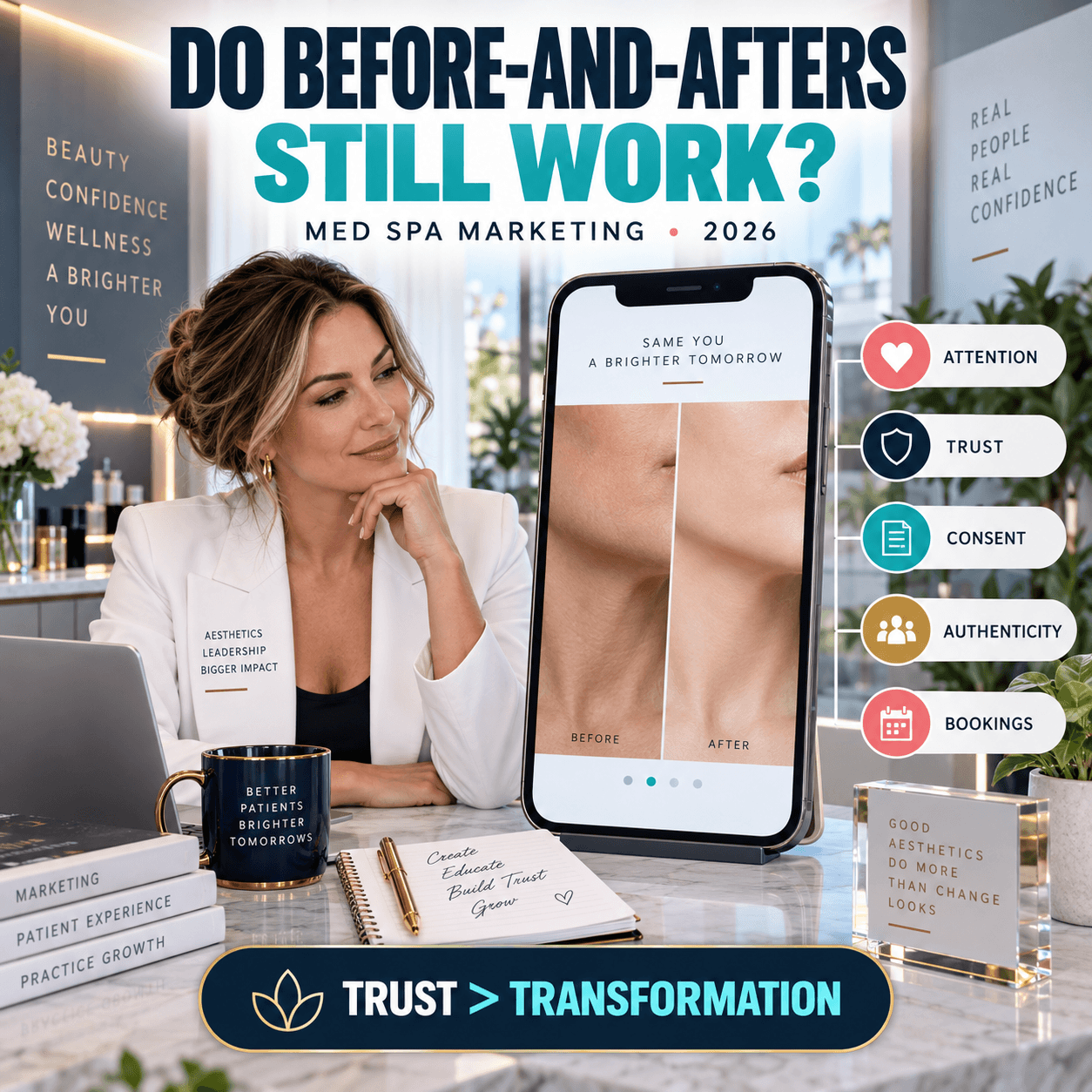
Before-and-after content still converts better than almost anything else a med spa can post — but in 2026, running it as a paid Meta ad is riskier than it used to be, and organic posting still carries real consent and disclaimer obligations. Here's what actually still works.
The short answer
Yes, before-and-after content still works — it remains the highest-converting proof format for aesthetic treatments. What's changed is where it's safe to run it. Meta's ad review in 2026 treats before-and-after imagery, especially side-by-side comparisons and "reveal" framing, as high-risk for weight loss, body contouring, and skin treatment ads specifically, and its automated image scanning now flags visual cues — harsh lighting, zoomed-in skin texture, high contrast — that imply dramatic transformation even when the copy is compliant. Organic posts and website galleries face fewer platform restrictions, but carry the same FTC and consent obligations paid ads do.
What's actually restricted, and where
Paid Meta ads. Side-by-side before-and-after comparisons, countdown or "reveal" framing, and language promising visible change in a short time are all treated as high-risk in Meta's 2026 ad review, particularly for weight loss, body contouring, and skin treatments. Ads can be flagged on visual implication alone — Meta's automated scanning looks at lighting, contrast, and zoom level, not just the caption. What tends to survive review: treatment-process visuals (in-clinic footage, consults), educational content explaining how a treatment works, and testimonials focused on the experience rather than a specific numeric result.
Organic posts and your own website. Fewer platform-level restrictions, but the FTC's requirements apply regardless of where the content runs: results shown must be representative of typical outcomes, not exceptional cases, and require a clear disclaimer — "results not typical" or "individual results may vary" — not a decorative footnote.
Consent, everywhere. Every before-and-after published anywhere needs a signed release specific to the treatment shown, naming the platforms it's approved to run on. A verbal okay in the treatment room is not a substitute, and state medical boards can and do treat missing consent documentation as a standalone violation separate from any advertising issue.
What to run instead of the flagged formats
The formats holding up best in 2026 aren't a downgrade from before-and-afters — they're a different kind of proof: process content (what an actual consult and treatment look like), provider-led educational video explaining a treatment and who it's right for, and testimonials that describe the experience and outcome in the patient's own words rather than a practice-supplied number or timeline. These carry lower ad-review risk and, done well, build the kind of trust a single dramatic photo can't — which is also the structured, specific information that AI assistants answering "is this treatment right for me" tend to pull from over a bare image.
FAQ
Are before-and-after photos still allowed on Instagram and Facebook ads?
They're not banned outright, but Meta's 2026 ad review treats side-by-side comparisons and dramatic-transformation framing as high-risk, especially for weight loss, body contouring, and skin treatments, and can flag ads based on the image alone.
What disclaimer is required on before-and-after photos?
FTC guidance requires that results shown be representative of typical outcomes, not exceptional cases, accompanied by a clear disclaimer such as "results not typical" or "individual results may vary."
Do I need patient consent to post a before-and-after photo?
Yes — a signed release specific to the treatment shown and naming the platforms it's approved for, not a verbal agreement. Missing documentation can be treated as its own compliance violation by state medical boards.