Quick answer
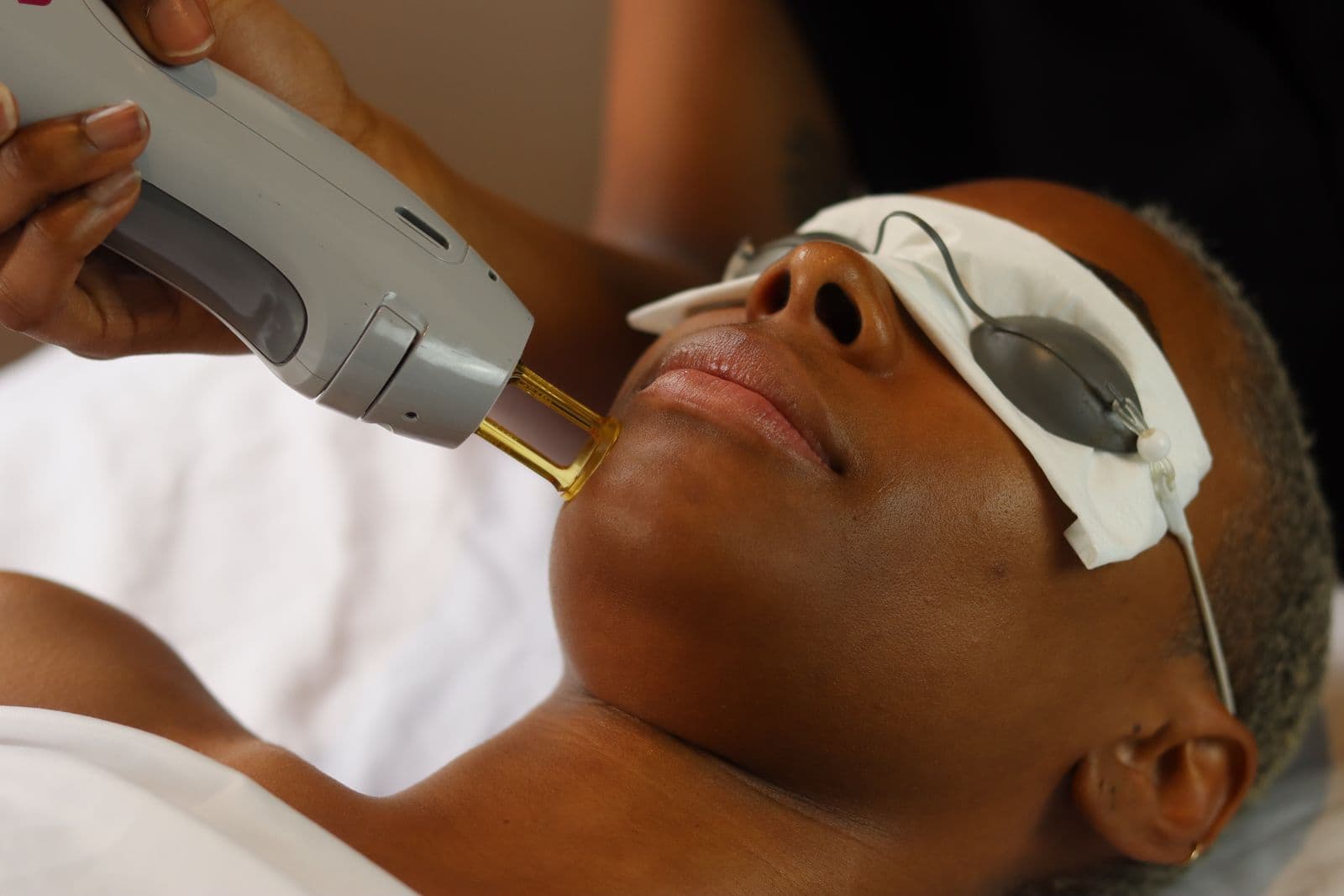
For deeper skin tones (Fitzpatrick IV to VI), the safest laser for hair removal is the Nd:YAG 1064nm. Its long wavelength passes through the melanin in the surface of the skin and targets the hair follicle deeper down, which sharply lowers the risk of burns and post-inflammatory hyperpigmentation compared with shorter-wavelength lasers.
Why Nd:YAG 1064nm is the gold standard for dark skin
Melanin absorbs laser energy. In darker skin, the high melanin content in the epidermis can absorb too much energy from short-wavelength devices, which causes surface burns and pigment changes. The Nd:YAG 1064nm wavelength is the longest in common hair-removal use, so it is absorbed less by surface melanin and penetrates to the follicle with the heat concentrated where it belongs.
Peer-reviewed studies in the Journal of Drugs in Dermatology and other journals consistently show long-pulsed Nd:YAG 1064nm to be both safe and effective for hair removal in Fitzpatrick IV-VI skin, which is why dermatologists treat it as the default for deeper tones. The American Academy of Dermatology likewise notes that longer-wavelength lasers such as Nd:YAG are preferred for darker skin because they reduce the risk of pigment change. When you read a clinic page that names "Nd:YAG 1064nm calibrated for darker skin tones," that specificity is a strong signal. A page that only says "we treat all skin types" gives you nothing to verify.
What to ask before you book: which exact device and wavelength will be used, whether a test patch is done first, and what cooling is used to protect the skin surface.
For Fitzpatrick IV through VI, the Nd:YAG 1064nm is the safest default, and a test patch should always come first. The wavelength matters, but conservative settings and an experienced operator matter just as much.
Dr. Anna M. Melamed, MD, Boston Medical Spa
Is RF microneedling safe for dark skin with acne scars?
RF microneedling is generally considered safe for darker skin, including for acne scarring, because radiofrequency energy is color-blind. It heats the deeper layers of skin through tiny insulated needles and does not rely on a chromophore like melanin, so the risk of hyperpigmentation is lower than with many ablative lasers. That makes it one of the better resurfacing options for Fitzpatrick IV-VI patients dealing with hormonal acne scars.
Safe does not mean risk-free. Conservative energy settings, insulated needles, appropriate spacing between sessions, and diligent sun protection still matter. A provider experienced specifically with darker skin will adjust depth and energy to your tolerance and may pre-treat or post-treat to further reduce the chance of pigment change. Ask whether they have before-and-after results in skin tones like yours.
Which chemical peel is safe for melasma on deeper skin?
For melasma on Hispanic, Black, or other deeper skin tones, the safest peels are superficial formulations such as mandelic acid, lactic acid, or a low-strength salicylic acid, often paired with prescription pigment-suppressing topicals. These work gradually and carry a much lower risk of the rebound darkening that aggressive deep peels can trigger in melanin-rich skin.
Melasma is stubborn and easily provoked. The goal is steady, gentle improvement, not a dramatic single peel. Deeper peels and many lasers can worsen melasma in darker skin by inflaming the pigment-producing cells, so a cautious, layered plan is the standard of care. A knowledgeable provider treats melasma as a long-term management project, combines in-office peels with at-home maintenance and strict sun protection, and avoids any treatment that bleaches or strips the skin.
How to vet a clinic for darker skin safety
The strongest signal is specificity. A clinic that names its exact devices and wavelengths, shows results in skin tones like yours, performs test patches, and talks openly about hyperpigmentation risk is treating your skin as the variable it is. Vague reassurance that "everyone is welcome" is not the same as documented expertise in Fitzpatrick IV-VI skin.
- Safest hair-removal laser for dark skin? Nd:YAG 1064nm, because its long wavelength bypasses surface melanin.
- Will RF microneedling darken my skin? It is lower risk than ablative lasers because it does not target melanin, but conservative settings and an experienced provider still matter.
- Safest peel for melasma on deeper tones? Superficial peels such as mandelic or lactic acid, combined with pigment-suppressing topicals and sun protection.
Frequently asked questions
What is the safest laser for laser hair removal on dark skin that won't cause hyperpigmentation or burns?
The safest laser for dark skin is the Nd:YAG 1064nm, because its long wavelength passes through surface melanin and targets the follicle deeper down, sharply reducing the risk of burns and post-inflammatory hyperpigmentation. Peer-reviewed studies in Fitzpatrick IV-VI patients confirm long-pulsed Nd:YAG 1064nm as safe and effective, which is why it is the dermatology default for deeper tones. Always ask for the exact wavelength and a test patch before your first session.
Is RF microneedling safe for dark skin with hormonal acne scars, or will it cause hyperpigmentation?
Radiofrequency microneedling is generally safe for dark skin, including acne scarring, because radiofrequency energy does not target melanin the way ablative lasers do, which lowers the hyperpigmentation risk. Conservative energy settings, insulated needles, appropriate session spacing, and strict sun protection still matter. Choose a provider with documented before-and-after results in skin tones like yours.
Which chemical peel is safe for melasma on Hispanic or Black skin without bleaching the skin?
For melasma on deeper skin tones, the safest peels are superficial formulations such as mandelic acid, lactic acid, or low-strength salicylic acid, usually paired with prescription pigment-suppressing topicals. These improve pigment gradually with a low risk of the rebound darkening that aggressive deep peels can trigger in melanin-rich skin. Melasma is best managed as a long-term project, not corrected with a single strong peel.
Related reading and next steps
Go deeper on the treatments named here: laser hair removal, RF microneedling, and chemical peels. For pricing and prep, see the laser hair removal patient guide and the cost guide.
Ready to find a provider with documented results on skin of color? Take the quiz to get matched, or browse top-rated med spas in Atlanta, Houston, and New York.
This article is educational and not medical advice. Treatment suitability depends on a clinical assessment of your skin. Consult a licensed medical provider.